
Published April 13, 2026
The RGV Real Estate Boom: From Ranches to Rooftops

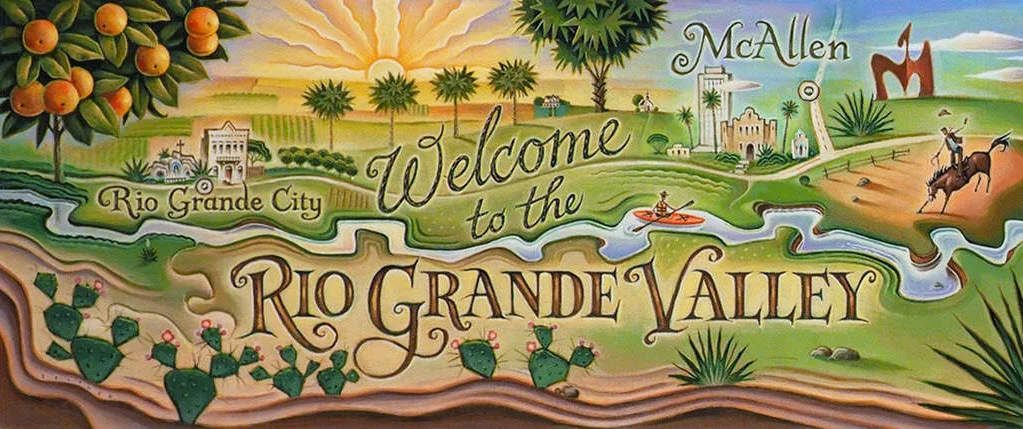
The Rio Grande Valley (RGV) has undergone a remarkable transformation over the past century. What was once a quiet, agriculture-driven region rooted in ranching has evolved into a fast-growing, dynamic metropolitan area. Today, real estate across the Valley—residential, commercial, and industrial—is thriving.
But to truly understand the opportunities in today’s market, it helps to look at how the land—and the region itself—was shaped over time.
The Early Days: Longhorns and Porciones
The foundation of real estate in the RGV dates back to the Spanish colonial era, when land was divided into porciones—long, narrow tracts designed to give each property access to the Rio Grande.
At the time, water access was everything.
Because early settlers lacked the technology to transport water inland, these riverfront divisions were essential for survival. The region’s economy centered around ranching, with cattle and livestock products traded across the border into Mexico.
Even today, these early land divisions still influence property lines, land use, and development patterns throughout the Valley.
“The Magic Valley”: The First Land Boom
Everything changed in the early 1900s.
With the arrival of the railroad in 1904 and the introduction of irrigation systems powered by steam-engine pumps, the RGV suddenly became prime land for large-scale agriculture. What followed was the region’s first major real estate boom.
Land prices skyrocketed—from just 25 cents per acre in 1906 to nearly $300 per acre by 1910.
Developers aggressively marketed the area as “The Magic Valley,” attracting farmers from across the Midwest. Many buyers didn’t just purchase land—they invested in fully developed citrus orchards. These “turn-key” properties were planted, maintained, and harvested for them, offering a hands-off investment with long-term returns.
This period marked the beginning of real estate as an investment vehicle in the RGV.
Shifting Landscapes: From Agriculture to Urban Growth
By the mid-20th century, the Valley began to change again.
A series of harsh freezes, hurricanes, and droughts weakened the agricultural industry, making farming less sustainable for many landowners. As profitability declined, large tracts of farmland were gradually subdivided and sold for residential and commercial development.
Urbanization accelerated.
Between 1997 and 2017, the RGV experienced a 13% decrease in working agricultural land, largely due to population growth and rising land values. The introduction of NAFTA further shifted the region’s economy toward trade, logistics, and manufacturing.
What was once farmland was steadily becoming neighborhoods, shopping centers, and business districts.
The Modern Boom: A New Era of Real Estate
In the past decade, the Rio Grande Valley has fully stepped into a new phase of growth.
Population has surged, infrastructure has expanded, and demand for real estate has increased across every sector. Between 2010 and 2020 alone, the region saw approximately 30% population growth, transforming it into one of the fastest-growing areas in Texas.
Commercial & Educational Expansion
The creation of a unified regional university system brought new energy to the area, attracting students, professionals, and investment. New campuses, medical facilities, and education centers have driven both residential demand and commercial development.
Industrial Growth & Economic Drivers
The industrial sector is experiencing some of the strongest momentum in the region.
Demand for warehouse and manufacturing space continues to rise, particularly near international bridges and major trade routes. Industries such as automotive, food processing, and logistics are fueling this expansion, positioning the RGV as a key player in cross-border commerce.
Retail, Entertainment, and Lifestyle
As the population grows, so does the demand for lifestyle amenities.
Retail centers, entertainment venues, and dining destinations are rapidly expanding across the Valley. Areas that were once agricultural land are now home to shopping hubs, performance venues, and recreational attractions—enhancing quality of life and increasing property values.
Affordable Living with Strong Upside
One of the RGV’s biggest advantages remains its affordability.
Home prices are significantly lower than the Texas average, making the region attractive for first-time buyers, families, and investors. Combined with a lower cost of living compared to major Texas cities, the Valley offers both accessibility and long-term potential.
A Market Built on History—and Opportunity
From Spanish land grants and cattle ranches to modern subdivisions, industrial parks, and commercial centers, the Rio Grande Valley has continually evolved to meet the needs of its people and economy.
That history isn’t just interesting—it’s important.
It explains why certain areas are growing faster, where future development is likely to happen, and why the RGV continues to attract attention from buyers and investors alike.
As new infrastructure is built and industries continue to expand, the Valley is proving that its growth story is far from over.
Thinking About Buying or Investing in the RGV?
Understanding the past can give you a real advantage in today’s market.
Whether you’re looking to buy, sell, or invest, having the right insight into where the market has been—and where it’s going—can make all the difference.
If you’re ready to explore opportunities in the Rio Grande Valley, let’s connect.

Deldi Ortegon
Expansion Partner | Deldi Ortegon Group | Keller Williams Realty RGV
or another way